Toon Tone
Color perception test: recreate cartoon colors from memory using HSB sliders. Weighted scoring (Hue 50%). Memory overstates saturation—adjust downward. Quick 5-min skill drill.
Category
Puzzle Game
Rating
4.7 / 5
Votes
1093
What to expect
A Toon Tone guide for understanding HSB vs RGB choice, why memory overstates saturation, how weighted scoring rewards precision, and knowing if this color drill suits you.
What is Toon Tone?
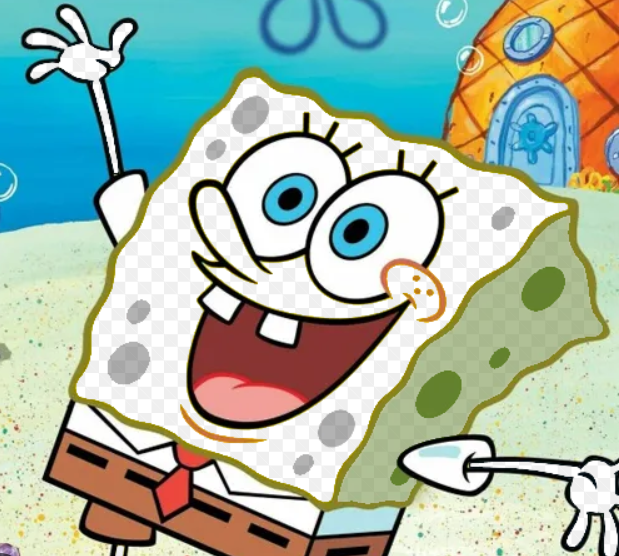
Toon Tone is a color matching game that challenges you to recreate specific cartoon character colors from memory using Hue, Saturation, and Brightness sliders. Each session runs five rounds where you see a character with one color region highlighted, then attempt to dial in that exact shade using only your recall and the live slider preview. Scoring is weighted—Hue counts 50%, Saturation and Brightness 25% each—and the formula uses exponential scaling, which means near-perfect matches score dramatically higher than close approximations.
The game offers two modes: Normal (no preview, pure memory) and Easy (3-second color reveal before sliders appear). Both modes track personal bests independently and save scores locally via browser storage. The browser-based format means no download or account required—you open the page and start playing immediately on any device.
The appeal is threfold: it’s a quick skill test (under five minutes per session), it provides real-time feedback on color perception, and it trains the habit of thinking about color in three independent dimensions rather than as a single vague impression. Designers, illustrators, and anyone working with visual media find the deliberate practice useful for calibrating their color eye.
How to Play Toon Tone
Pick a Mode
- Choose between Normal mode (no preview) or Easy mode (3second preview).
- In Normal, you rely entirely on memory.
- In Easy, you see the color briefly before the sliders appear.
- Both modes track your personal best separately.
Why HSB Instead of RGB
Toon Tone uses HSB (Hue, Saturation, Brightness) rather than RGB (Red, Green, Blue) because HSB maps more directly to how people naturally reason about color. When you judge a shade as “too yellow” or “a bit washed out,” you’re thinking in hue and saturation terms. RGB requires mentally combining three additive light sources, which is how screens generate color but not how humans intuitively describe it.
The HSB model separates color into three psychologically meaningful axes. Hue is the color family—red, orange, yellow. Saturation is vividness—how much gray is mixed in. Brightness is lightness—how close to black or white. Adjusting each slider independently lets you isolate what’s wrong with your guess without fighting interference from the other dimensions.
This structure is why the game scores Hue at 50% weight. Hue is the easiest to get approximately right but hardest to nail precisely. You can tell if something is blue-adjacent quickly, but distinguishing cyan from cerulean requires careful adjustment. Saturation and Brightness are 25% each because they’re easier to fine-tune once Hue is locked—they’re refinement axes rather than identification axes.
Why Memory Overstates Saturation
One consistent pattern among players is overestimating saturation. Memory tends to amplify vividness—your brain remembers colors as punchier than they actually were. This happens because saturation creates visual impact, and impactful details encode more strongly in memory. When you’re reconstructing a color from recall, that amplified impression feels accurate, but the slider reveals it’s too intense.
The fix is deliberate correction. If your first instinct produces a vibrant match, pull saturation back 10-15% and compare. Cartoon colors often look bold in context (surrounded by line art and contrasting hues) but measure surprisingly moderate in isolation. The hint feature helps here—use it not to copy the answer but to check whether you’re too saturated, too pale, or in the right zone.
This saturation bias is why Easy mode’s3-second preview isn’t a shortcut—it’s color memory training. You see the real color briefly, then reconstruct it from that fleting exposure. The gap between what you remember and what you saw is where your color sense improves. Over repeated sessions, you start premptively adjusting saturation downward because you’ve learned your memory exaggerates it.
Who This Drill Suits
Toon Tone works for anyone who wants to sharpen their ability to deconstruct color analytically. If you work in design, illustration, photography, or any visual field where color judgment matters, the game provides low-friction practice separating color into its components. The tight feedback loop—guess, submit, see error, adjust—accelerates learning compared to passively studying color theory.
It’s less suited to players looking for narrative, progression systems, or social features. There are no unlockables, no leaderboards comparing you to other players, no achievements beyond your personal best score. The game is a calibration tool, not an entertainment loop. If you find satisfaction in incrementally improving a measurable skill, that’s enough motivation. If you need external rewards or variety, the repetitive structure won’t hold attention.
The five-round session length makes it easy to fit into breaks. You can play one session in under five minutes, check your score against previous best, and move on. The replay button lets you immediately start another session if you want to beat your score while the feedback is fresh. That accessibility makes it viable as a daily drill without requiring extended time blocks.
The weighted scoring formula creates a skill ceiling that’s hard to reach. Casual players might average 6-7 out of 10 per round. Getting consistent9s requires not just decent color sense but deliberate strategy—locking Hue first, pulling Saturation back premptively, fine-tuning Brightness last. Perfect 10s across all five rounds are rare enough that achieving one feels like genuine mastery rather than lucky guessing.
For another browser game testing visual perception with different mechanics, try Suika Game Online, a physics merging puzzle that rewards spatial reasoning.
Share your tips for Toon Tone
Share a useful tip, a favourite route, or a correction that can help the next player.
Comments are not collected on this independent fan site.
To report a broken game frame or suggest a guide correction, email [email protected] with the page URL.