

Geometry Dash Full Version
Access complete Geometry Dash in browser: 20+ official levels from Stereo Madness to Deadlocked. Unlock 8 icons, practice mode, level editor. No mobile purchase required.
Category
Rhythm Platformer
Rating
4.8 / 5
Votes
1121
What to expect
A Geometry Dash Full Version guide for understanding the 1-to-15-star difficulty ladder, how each of the 8 icons changes gameplay, when Practice mode helps versus when it doesn't, and who this full experience suits.
What Geometry Dash Full Version Actually Gives You
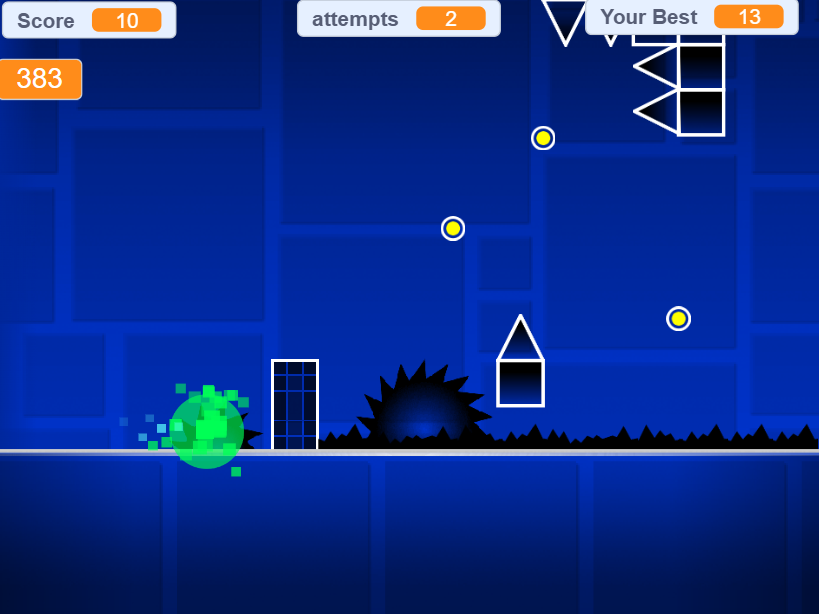
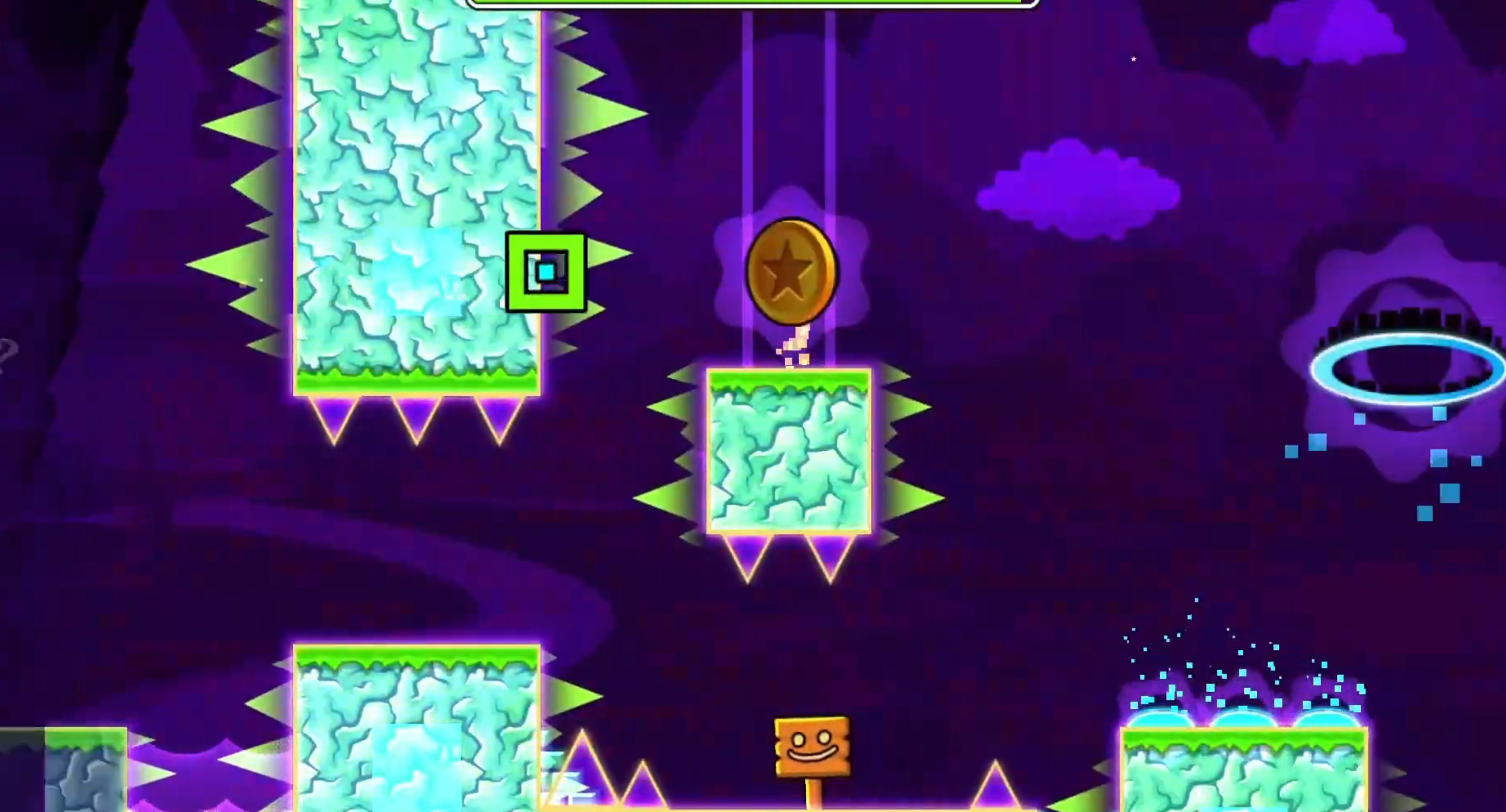
Geometry Dash Full Version includes over twenty official levels spanning the entire difficulty range—from one-star Easy levels that teach basic jump timing to fifteen-star Demon levels that test reaction speed and pattern memorization under pressure. This isn’t a demo or a stripped-down browser port; it’s the complete progression ladder that the game was designed around.
The difference between this and playing individual fan-made levels or single-challenge modes is structure. The full version builds your skills incrementally. Stereo Madness (the first level) introduces you to cube-mode jump timing without overwhelming obstacles. Back On Track adds speed and rhythm complexity. Polargeist mixes in new icons like the ship, which changes how you interact with obstacles. By the time you reach Deadlocked or other Demon-tier levels, you’ve spent hours internalizing the mechanics that those stages assume you already know.
The full version also gives you access to all eight playable icons—cube, ship, ball, UFO, wave, robot, spider, and swing—plus the ability to unlock cosmetic customizations through coin collection. If you’re only playing standalone levels or variants, you miss the progression system that makes unlocking new icons feel earned rather than arbitrary.
Why the 1-to-15-Star Ladder Matters
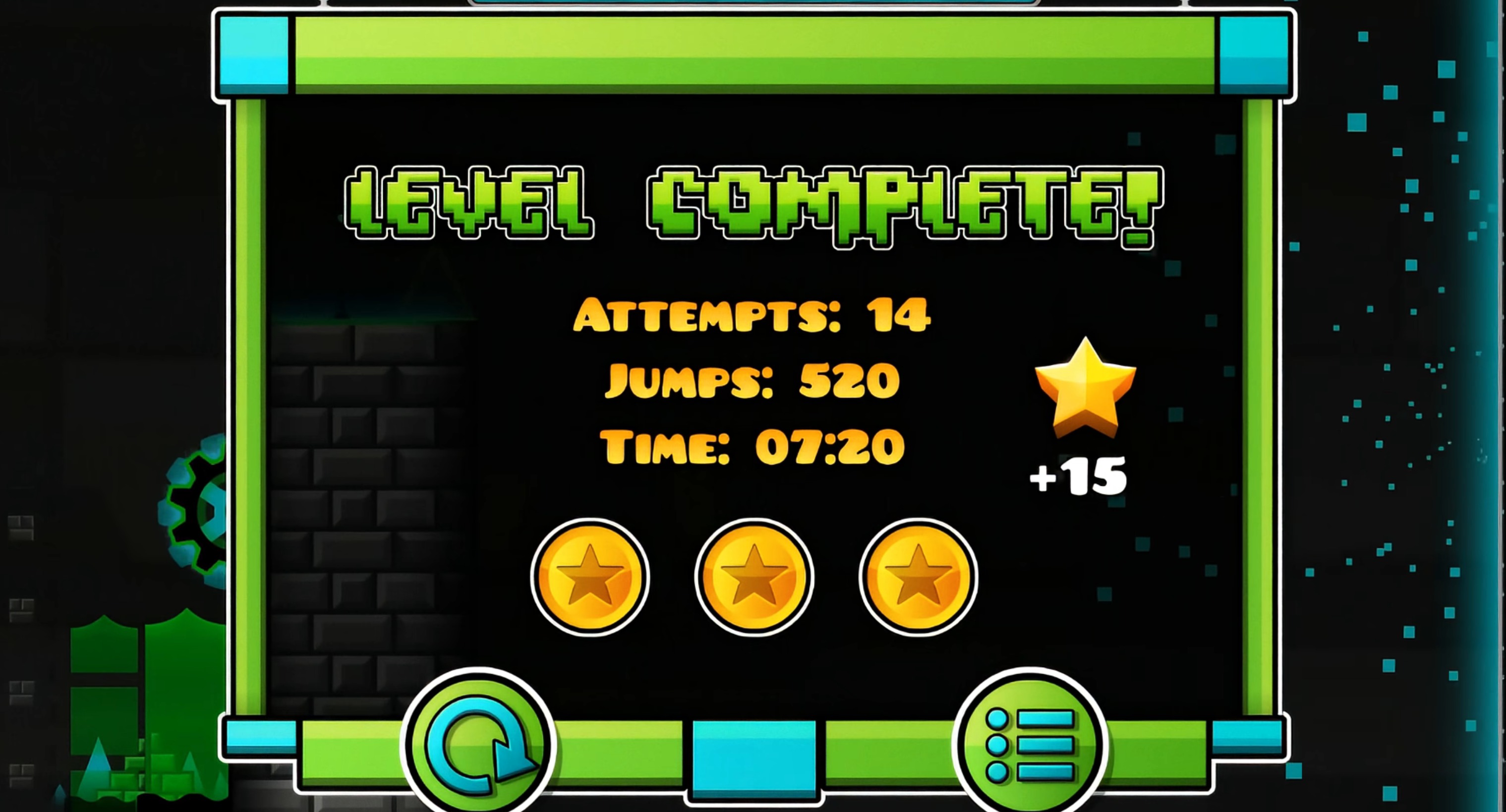
The star rating system isn’t just decoration—it’s a skill roadmap. One-star and two-star Easy levels teach you to read obstacles and time single jumps. Three-star and four-star Normal levels introduce rhythm sync and faster scrolling. Five-star and six-star Hard levels add tighter windows and multi-icon sequences.
By the time you hit seven-star Harder or ten-star Insane, the game expects you to handle rapid mode switches, memorize patterns, and execute frame-perfect inputs without hesitation. Demon levels (fourteen to fifteen stars) assume all of that is second nature and layer on additional complexity—faster speeds, narrower gaps, and less forgiving obstacle placement.
If you skip straight to the hardest levels without climbing this ladder, you’ll hit a wall. Not because those levels are poorly designed, but because they’re designed for players who’ve already internalized the skills that earlier levels teach. The full version forces you to progress through that structure, which means when you finally reach a Demon level, you’ve built the reflexes and pattern recognition needed to have a realistic shot at clearing it.
How Each Icon Changes What You’re Actually Doing
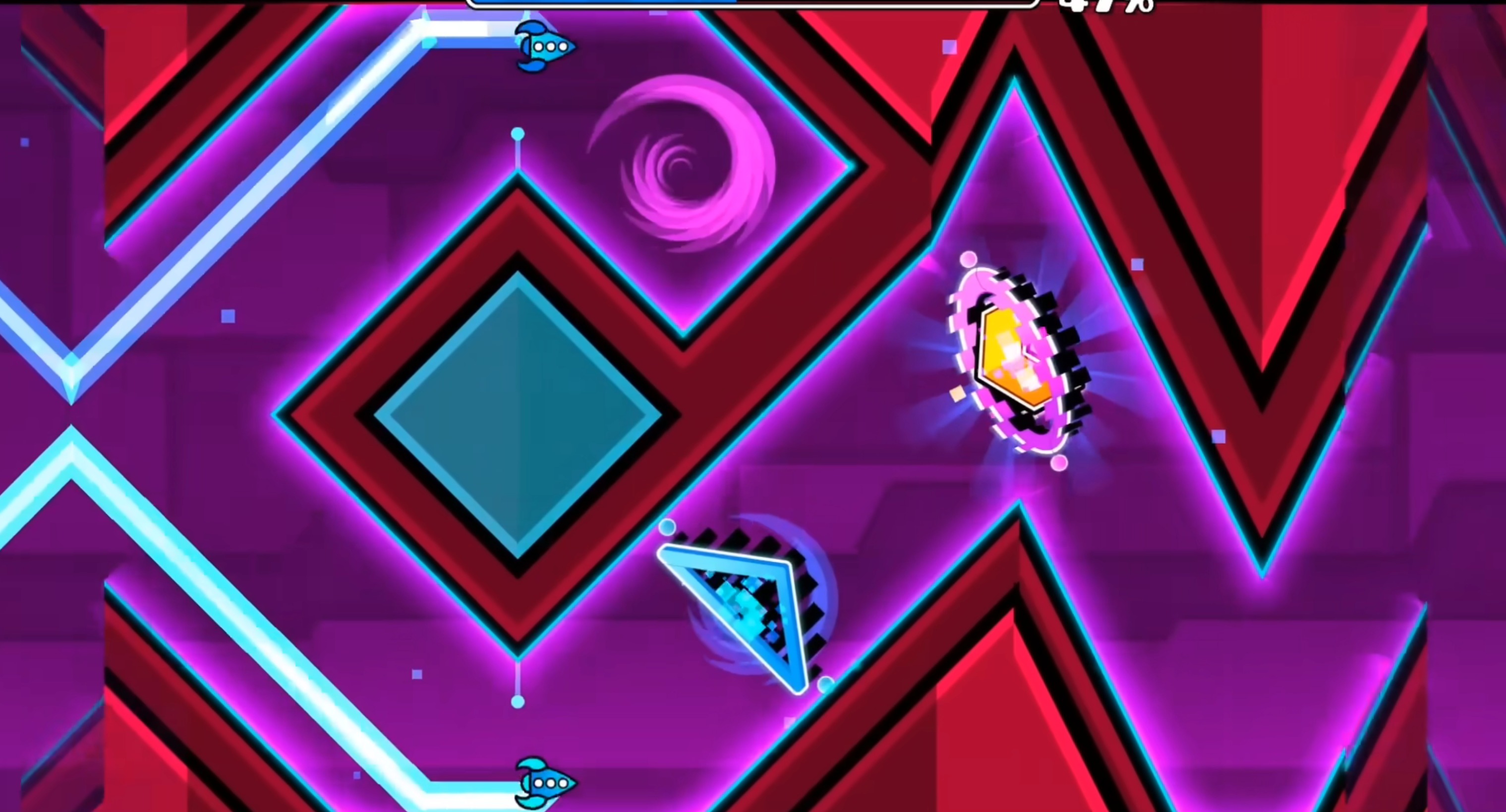
Icons aren’t cosmetic variants—they’re different control schemes. Cube mode uses discrete jumps with fixed arcs. Ship mode requires sustained input to maintain altitude and releases to drop. Ball mode flips gravity when you tap, which inverts your spatial reasoning. UFO mode gives you short burst hops while airborne. Wave mode demands constant micro-adjustments because you’re controlling diagonal trajectory in real time.
Robot mode changes jump height based on how long you hold the input, which means you’re judging timing and pressure simultaneously. Spider mode teleports you between fixed positions, so you’re no longer controlling continuous movement—you’re triggering discrete state changes. Swing mode uses curved momentum, which behaves differently from straight-line physics.
Each icon requires you to relearn muscle memory. A jump pattern that works perfectly in cube mode fails completely in wave mode because the physics are fundamentally different. The full version trains you on each icon gradually, introducing them one at a time across multiple levels so you can build fluency before the game starts mixing them rapidly within a single stage.
When Practice Mode Helps and When It Doesn’t
Practice mode lets you place checkpoints and slow the game to half speed, which is essential for learning complex sections. If you’re stuck on a specific segment—say, a tight wave section at 70% into a level—you can checkpoint right before it and drill that pattern repeatedly without replaying the entire stage.
The limitation is that Practice mode doesn’t train endurance. Clearing a level in Practice mode with checkpoints every ten seconds proves you can handle each piece individually, but it doesn’t prove you can execute the entire level in one continuous run. That final step—removing the checkpoints and committing to a full attempt—requires a different kind of focus that Practice mode doesn’t prepare you for.
Some players use Practice mode to scout every level first, others only use it when they’re genuinely stuck. The risk of over-relying on Practice mode is that you never develop the stamina or the ability to recover from small mistakes mid-run. At some point, you have to switch to Normal mode and accept that failures are part of building the skill needed for clean clears.
How to Play Geometry Dash Full Version
Jump to the Beat
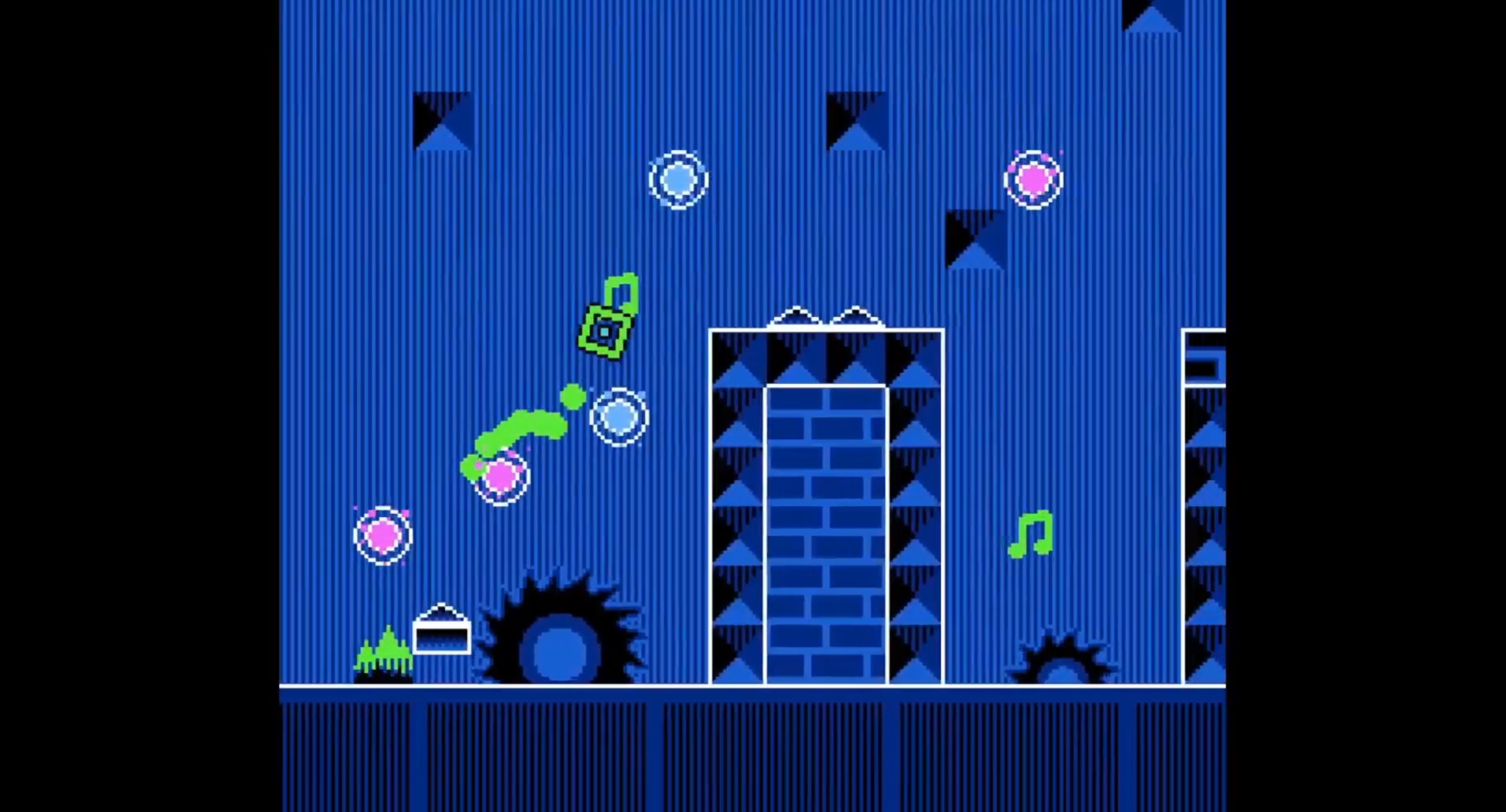
- Hold or tap the screen to make your icon jump.
- In this rhythm game, the music guides your jumps.
- Spikes, saw blades, and other deadly obstacles line your path.
- Time your taps perfectly to avoid hazards and reach the end of the level.
Transform Your Icon
- As you progress through levels, you can unlock and transform into different icons.
- Each formCube, Ship, Ball, UFO, Wave, Robot, Spider, and Swinghas unique movement mechanics.
- Master all forms to conquer every level type.
Practice and Conquer
- Use Practice Mode to place checkpoints, slow down, and experiment with tricky sections.
- Once you’ve mastered a section, attempt the full level.
- Geometry Dash is a game of patience and precision.
- The more you play, the better your reflexes become!.
Who the Full Version Is Built For
Geometry Dash Full Version works for a wide skill range because the20+ levels cover Easy to Demon difficulty. If you’re new to rhythm platformers, the early levels teach you the basics without punishing mistakes harshly. If you’ve already mastered other rhythm games, the mid-to-late levels provide the challenge you’re looking for without forcing you to grind through trivial content.
It’s less suited to players who only want extreme difficulty or who get frustrated by gradual progression. If you’re the type who wants to jump straight to the hardest content, the full version’s structure will feel slow. The game is built around incremental skill development, not instant access to endgame challenges.
The browser version saves progress locally, so you can pick up where you left off as long as you’re on the same device. If you switch devices frequently, that becomes a limitation—there’s no cloud sync in the web version.
For a standalone extreme challenge without the progression ladder, try Deadlocked, a three-star Demon level that tests your limits immediately.
Share your tips for Geometry Dash Full Version
Share a useful tip, a favourite route, or a correction that can help the next player.
Comments are not collected on this independent fan site.
To report a broken game frame or suggest a guide correction, email [email protected] with the page URL.